Whisker Fatigue in Cats: Is Your Bowl the Problem?
The Short Answer
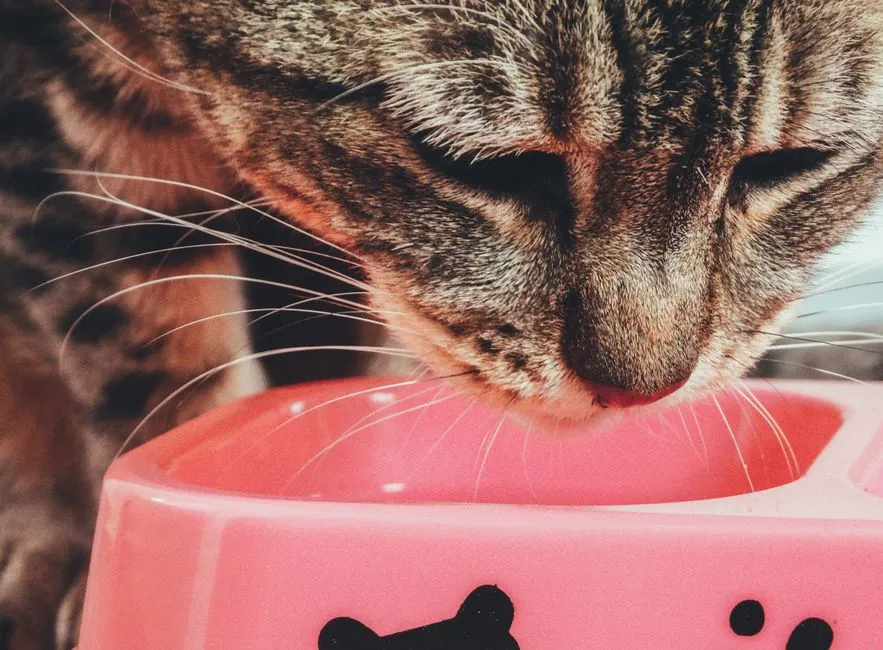
Whisker fatigue is the theory that deep, narrow food bowls overstimulate a cat's highly sensitive whiskers, making mealtimes stressful enough that some cats paw food onto the floor, tip bowls, or walk away from a full dish. The fix is cheap and low-risk: a wide, shallow dish — often sold as a "whisker-friendly" bowl or simply a saucer-style plate — that lets a cat eat without its whiskers brushing the sides.
Two things are true at once here, and a good guide should say both. First, the underlying anatomy is real: whiskers are packed with nerve endings and genuinely are among the most sensitive structures on a cat's body. Second, the scientific evidence that whisker fatigue is a widespread, well-defined condition is thin. Published research on the question is limited, and results have been modest rather than dramatic. So we treat whisker fatigue not as a diagnosis but as a practical bowl-design question — because whatever you call it, plenty of cats visibly prefer eating from wide, shallow dishes, and switching costs almost nothing.
What Whisker Fatigue Actually Is
A cat's whiskers (vibrissae) are not just stiff hairs. Each one sits in a follicle dense with nerves and blood vessels, feeding the brain constant information about air currents, nearby surfaces, and whether a gap is wide enough to fit through. They are measuring instruments, and they are always on.
The whisker-fatigue theory says that when a cat has to push its face into a deep, narrow bowl at every meal, its whiskers drag against the sides again and again. That repeated stimulation is thought to be unpleasant — less like pain, more like someone tapping your ear every few seconds while you eat. Over time, the theory goes, some cats start associating the bowl itself with that discomfort and develop workarounds: scooping food out with a paw, eating only from the center of the bowl, or acting hungry while refusing to finish.
Why the bowl gets the blame
Deep bowls create a simple geometry problem. A cat's whiskers typically span wider than its head — that's the point of them. A bowl that is narrower than the whisker span at eating depth forces contact on every bite. Kibble that settles into the corners of a deep, steep-sided bowl makes it worse, because the cat has to dig for the last third of the meal.
An Honest Note on the Science
We think you should know where the evidence stands, because "whisker fatigue" gets marketed hard, and some of that marketing outruns the data.
- Well established: whiskers are richly innervated, highly sensitive sensory organs. No serious debate there.
- Plausible but not proven: that repeated whisker contact with bowl walls causes meaningful stress for many cats. Formal research on this is sparse, and what exists suggests a mild preference for wide dishes in some cats rather than a universal problem.
- Marketing, mostly: claims that whisker fatigue is a common medical condition, or that a special bowl will fix appetite problems generally. A cat that stops eating has earned a vet visit, not just new dishware.
Our position: a wide, shallow bowl is a sensible default for every cat, because it can help, essentially cannot hurt, and costs about the same as any other bowl. That is a much easier recommendation than most products get.
Signs Your Bowl Might Be the Problem
None of these signs is proof on its own, but a cluster of them — especially if they started or persist with a deep, narrow bowl — makes the bowl worth ruling out:
- Pawing food out of the bowl and eating it off the floor
- Eating only from the middle of the bowl and leaving a ring of food around the edges
- Tipping or nudging the bowl to spill kibble before eating
- Approaching the bowl, hesitating, then pacing in front of it while clearly hungry
- Making a mess at every meal in a cat that is otherwise a tidy eater
- Reluctance to finish, then begging shortly after mealtime
One important caveat: these behaviors overlap with dental pain, nausea, and other medical issues. If your cat's eating habits changed suddenly, if it is losing weight, or if it skips meals entirely, see your vet first. A new bowl is a fine experiment for a quirky eater; it is not a substitute for diagnosis in a sick one.
What a Whisker-Friendly Bowl Looks Like
You do not need a product labeled "whisker fatigue bowl" — you need the right geometry. Look for:
- Width: the eating surface should be wider than your cat's whisker span. For most adult cats that means a dish of roughly 6–8 inches across; big-headed breeds like Maine Coons benefit from more.
- Depth: shallow — food sitting no more than an inch or two below the rim. Saucer-style dishes and small rimmed plates qualify.
- Side angle: gently sloped or nearly flat sides let a cat reach food without face-planting into a wall of ceramic.
- Stability: shallow, light dishes slide. A wide base, non-slip ring, or a mat underneath keeps dinner stationary.
- Material: smooth, non-porous, easy to wash. This matters for chin acne and hygiene as much as comfort — our ceramic vs stainless steel comparison covers the trade-offs in detail.
Whisker-friendly options are inexpensive as cat gear goes — simple shallow dishes typically run in the $8–$25 range depending on material and brand, with prices varying by size and retailer. A plain saucer from your own kitchen works too, as long as it's stable and you're at peace with its new career.
Bowl styles at a glance
| Bowl style | Whisker contact | Best for | Worth knowing |
|---|---|---|---|
| Deep, narrow bowl | High — constant contact at the bottom | Nothing, honestly; skip it | The classic offender; kibble collects in corners |
| Standard medium bowl | Moderate — contact near the bottom third | Cats showing no bowl aversion | Fine for many cats; watch how yours eats |
| Wide shallow dish / saucer style | Minimal | Flat-faced breeds, messy eaters, suspected whisker sensitivity | Light ones slide; wet food can spread and dry out |
| Elevated shallow feeder | Minimal, with easier neck posture | Seniors, arthritic cats, cats that vomit after eating fast | Height must suit the cat — roughly shoulder level, not chin level |
| Slow-feeder / puzzle bowl | Varies — ridges can mean more contact | Speed eaters | Solves a different problem; choose wide, shallow-ridged designs |
Flat-faced (brachycephalic) breeds — Persians, Exotic Shorthairs, Himalayans — deserve a special mention: their face shape makes deep bowls awkward regardless of whiskers, and a shallow dish is close to mandatory for them.
Don't Forget the Water Bowl
Whisker contact bothers cats at the water dish too, and the stakes are arguably higher, since cats are chronic under-drinkers to begin with. The same rules apply — wide and shallow beats deep and narrow — and it's one reason many cats prefer drinking from a dripping tap or a wide-basin fountain over a small bowl. If your cat splashes water, dips a paw and licks it, or ignores the bowl entirely, geometry may be part of it. Our guide to the best cat water fountains looks at basin width, materials, and cleanability with exactly this in mind.
A Simple At-Home Test
You can test the whisker theory on your own cat in a week, for free:
- Baseline: for two or three days, watch mealtimes with the current bowl. Note pawing, edge-avoidance, mess, and hesitation.
- Swap: serve identical food, same place and time, on a wide shallow dish or plate.
- Compare: give it three or four days — cats distrust novelty, so day one proves nothing. If the pawing and mess stop and your cat settles in to eat calmly, the bowl was the problem. If nothing changes, it wasn't, and you've spent nothing finding out.
Keep everything else constant during the test: bowl location matters to cats, and a dish moved to a high-traffic hallway will fail for reasons that have nothing to do with whiskers.
The Bottom Line
Whisker fatigue is a genuinely useful idea wrapped in some overheated marketing. The sensible takeaway isn't that your cat has a syndrome — it's that bowl geometry is one of the cheapest comfort upgrades in the feeding aisle. Choose wide and shallow, keep it stable and clean, apply the same logic to water, and reserve real concern — and the vet visit — for cats whose appetite actually changes.