Cat Feeding Station Setup: Bowls, Placement & Cleaning
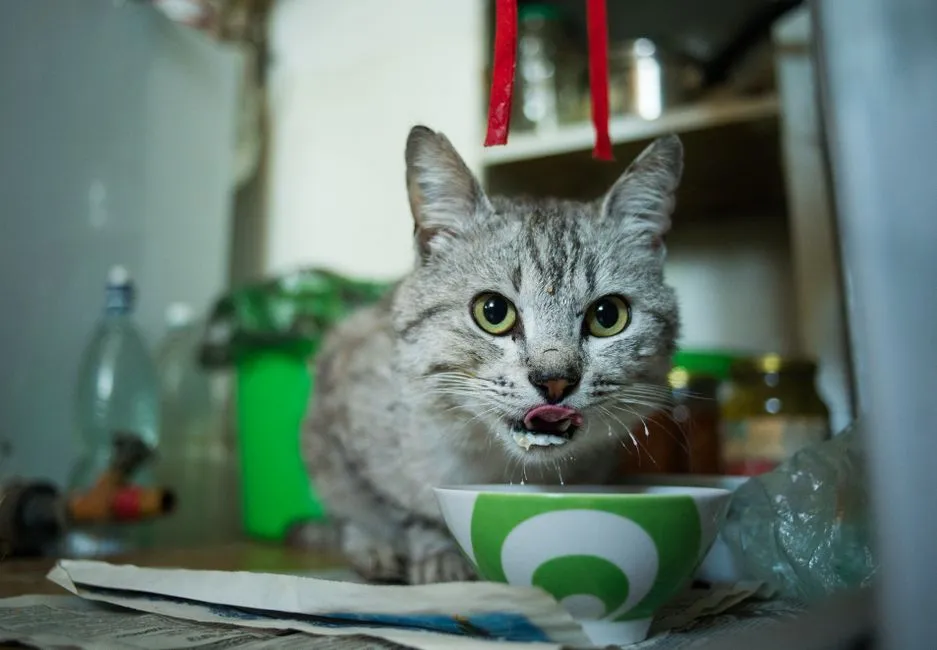
- How should you set up a cat feeding station?
- Where should food and water bowls go?
- Which bowls and mat make daily life easier?
- How do you feed several cats without creating a bottleneck?
- How often should you clean a cat feeding station?
- How should cat food be stored near the station?
- When should you add a fountain or special feeder?
- What can a feeding station look like in a small home?
- When does an eating change need a veterinarian?
- What should you check after the first week?
- Sources
How should you set up a cat feeding station?
A good cat feeding station uses stable, washable bowls in a quiet, easy-clean spot away from litter trays. Put food and water in separate locations, and give each cat its own feeding area with visual separation if needed. Wash wet-food bowls after every use and dry-food and water bowls daily. Store food securely, monitor what each cat actually eats, and ask your vet about appetite, weight, or prescribed diets.
The word “station” can be misleading. For a cat, the better setup is often a small system: food in one calm place, water somewhere else, and the litter tray away from both.
Start with five things:
- A quiet food location your cat can reach without passing another pet.
- A separate water location that stays available all day.
- Stable, intact bowls that are easy to wash and dry.
- A washable mat and a dedicated food scoop.
- Secure storage that keeps the label and batch information with the food.
A fountain or special feeder can come later if it solves a real problem.
Where should food and water bowls go?
Choose a place where your cat can eat without being startled, crowded or trapped. A quiet edge of a kitchen or living area often works better than the middle of a busy walkway. Avoid putting the food beside a washing machine, slamming door or the route the dog uses to reach the garden.
Cornell University’s cat-feeding guidance says heavy traffic, noise, other animals, dirty containers and nearby litter boxes can deter a cat from eating. The useful lesson is not that every cat needs a private dining room. It is that the cat should be able to approach, eat and leave without another animal controlling the route.
Keep food, water and litter in separate locations. The AAFP and ISFM feline environmental-needs guidelines treat feeding, drinking and toileting as distinct resources and specifically recommend separating food from water. There is no universal evidence-based distance in feet. In a small home, different sides of a room, a corner between them or separate stretches of counter and floor can create meaningful separation.
Do not make water hard to find in pursuit of perfect spacing. It should remain accessible at all times.
Which bowls and mat make daily life easier?
Pick bowls by the routine you can maintain, not by the fanciest product description. A useful food or water bowl is:
- smooth and intact, with no sharp edge, crack or peeling surface;
- stable enough not to skate across the floor;
- easy to lift, wash, rinse and dry;
- labeled dishwasher-safe if that is how you plan to clean it; and
- comfortably reachable by the cat using it.
Stainless steel and food-safe glazed ceramic can both work. Our ceramic versus stainless-steel bowl guide covers stability, damage and cleaning in detail.
A wide, shallow dish is a sensible preference test for a cat that leaves food around a deep bowl’s edge or pulls pieces onto the floor. It does not diagnose “whisker fatigue,” and appetite changes should not be explained away by bowl shape. Our whisker-fatigue explainer separates the useful geometry from the bigger marketing claims.
Use a mat that lies flat, does not slide and can be washed. A raised rim contains splashes, but it must not create a trip edge. Avoid fabric that holds wet-food residue.
Raised bowls are optional. If reaching the floor appears difficult, ask your veterinarian about the cause and suitable height. Any stand must remain steady when the cat leans on it.
How do you feed several cats without creating a bottleneck?
Two bowls touching on one mat are one feeding location, not two separate stations.
The Feline Veterinary Medical Association’s feeding guide recommends a food and water bowl for each cat, with distance and visual separation between feeding areas. Separate rooms are the clearest solution, but they are not the only one. A wall corner, furniture screen or stations on different sides of a room may stop cats from staring at each other while eating.
Watch the cats rather than the arrangement. A cat that hangs back, scans constantly, approaches in a crouch or waits until another cat leaves may not feel safe at that station. One cat may also finish quickly and move directly to a slower cat’s bowl. Feed behind closed doors when necessary, particularly when one cat has a prescribed diet.
An elevated location may separate a mobile cat from another pet, but only if that cat can climb and descend safely. A microchip feeder can restrict a bowl to one cat; it still needs cleaning, and you still need to confirm the intended cat is eating.
Keep portions and calorie targets out of the gadget’s hands. The FelineVMA guide directs owners to a veterinarian for an appropriate calorie and feeding plan, especially where cats overeat, undereat or have different needs.
How often should you clean a cat feeding station?
The routine is short when the setup is easy to reach:
| Item | Practical cleaning schedule |
|---|---|
| Wet-food bowl | After every use |
| Dry-food bowl | Daily |
| Water bowl | Daily |
| Dedicated scoop | After use |
| Mat or tray | Whenever food spills, plus a regular wash |
| Stand and nearby floor | Wipe when soiled; inspect during the weekly reset |
The wet-food, dry-food and water-bowl schedule comes from the US Centers for Disease Control and Prevention’s current pet-supply cleaning guidance. Wash with soap or detergent and warm water, scrub away residue, rinse and dry. A dishwasher is appropriate only when the item is labeled dishwasher-safe.
Cleaning and disinfecting are different jobs. Cleaning removes dirt and germs; disinfecting is an extra step. The CDC says ordinary cleaning is usually enough for most pet items, while more frequent disinfection may be appropriate when a pet or household member is sick or at higher risk. Follow the product label exactly, keep cats away during use and until surfaces are dry, and use any rinse step the label requires.
Do not use a disinfectant containing phenol around a cat; the CDC warns that phenols are very toxic to cats. Never mix bleach with ammonia or other cleaners because the mixture can produce toxic gases.
Fountains and automatic feeders add surfaces. Follow the cleaning instructions. If a cord, plug or mechanism is damaged, stop using the device and contact the manufacturer; do not attempt an internal repair.
How should cat food be stored near the station?
Storage should preserve the information needed during a recall. The US Food and Drug Administration’s pet-food storage guidance recommends keeping dry food in its original bag. Put the whole bag inside a lidded bin so the product name, manufacturer, lot number and best-by date remain available.
Store dry food and unopened cans in a cool, dry place below 80°F. Wash and completely dry a reusable storage container before starting a new bag. Keep a dedicated scoop with the food rather than using the cat’s bowl to dig through the bag.
Promptly refrigerate or discard unused canned or pouched food; the FDA says the refrigerator should be 40°F or below. Follow the product label after opening, and do not return food from a used bowl to its container.
If food smells wrong, the package is swollen or leaking, a foreign object appears, or your cat becomes ill after eating it, stop feeding it. Save the package information, call your veterinarian, and report the problem to the manufacturer and FDA.
When should you add a fountain or special feeder?
Add equipment after you can name the job it needs to do:
| Problem to solve | Tool worth considering | What it does not replace |
|---|---|---|
| Cat ignores a still water bowl | Water fountain | Daily checks, cleaning and a backup bowl |
| Cat rushes through meals | Cat-appropriate slow feeder | Veterinary assessment for new appetite or vomiting changes |
| Indoor cat needs more feeding activity | Simple puzzle feeder | Measuring the day’s total food and checking intake |
| Several small meals fit the plan | Timed feeder | A caregiver, a clean bowl or confirmation that food dispensed |
| One cat steals another’s diet | Microchip feeder | Separate supervision when the system is new |
Our water-fountain guide covers pumps and cleanability; keep a plain backup bowl. Our slow-feeder assessment helps match a fast eater to a cleanable design that does not cause frustration.
The FelineVMA advises starting puzzle feeders at an easy level and increasing difficulty gradually. Put part of the cat’s measured daily food in the puzzle rather than adding uncounted extras. A timed feeder can distribute meals, but it cannot tell you reliably that the right cat ate them unless you check.
What can a feeding station look like in a small home?
For one cat, put food on a washable mat in a quiet edge and water elsewhere. For two cats, use separate rooms or a visual barrier, and watch until you know neither steals or guards. With a dog or young child, use a divider or gate that protects food without trapping the cat. Keep gear away from human food preparation and clean shared surfaces after contact.
The setup has to survive an ordinary Tuesday. Simple and reachable wins.
When does an eating change need a veterinarian?
A feeding station can fix noise, crowding, sliding bowls and cleaning friction. It cannot diagnose illness.
If your cat stops eating, contact your veterinarian immediately rather than waiting out a bowl or location experiment. Cornell’s anorexia guidance explains that appetite loss can quickly have serious effects and requires investigation of the cause. Do not force-feed or syringe-feed unless your veterinarian directs you.
Contact your veterinarian when reduced intake comes with weight loss or when a cat on a prescribed diet cannot reliably access or keep down its food. Changes to calorie targets, prescription diets and feeding for a health condition belong in the veterinary plan, not in a feeder setting.
What should you check after the first week?
After seven days, check intake, water access, guarding and cleaning. Keep what works, move what creates tension and add gear only for a specific need. Our feeding and bowls guides can help with the next decision.
Sources
- AAFP and ISFM: Feline Environmental Needs Guidelines, accessed 3 September 2026. Supports separating food, water and toileting resources and providing multiple resource locations.
- Feline Veterinary Medical Association: How to Feed a Cat, accessed 3 September 2026. Supports separate multi-cat feeding stations, visual separation, gradual puzzle-feeder introduction, intake monitoring and veterinary feeding plans.
- Cornell Feline Health Center: Feeding Your Cat, updated 30 April 2026, accessed 3 September 2026. Supports quiet placement away from traffic, other animals, dirty bowls and litter boxes, plus veterinary weight guidance.
- CDC: Cleaning and Disinfecting Pet Supplies, updated 18 February 2026, accessed 3 September 2026. Supports the bowl-cleaning schedule, cleaning methods, dishwasher limits and disinfectant precautions.
- FDA: Proper Storage of Pet Food and Treats, accessed 3 September 2026. Supports original-package storage, temperatures, leftover handling, utensil cleaning and problem reporting.
- Cornell Feline Health Center: Anorexia, accessed 3 September 2026. Supports immediate veterinary consultation for appetite loss and avoiding unguided force-feeding.