Cat Toy Safety: Strings, Small Parts and What Needs Supervision
The Short Answer: String Toys Are Supervision-Only, Not Banned
String toys — wands, ribbons, teasers with long trailing lures — are safe for cats only while you're holding the other end. The danger isn't the play; it's what happens after. A cat left alone with string, ribbon, elastic or yarn can swallow it, and swallowed string is one of the most serious toy-related emergencies a cat can have. The fix is simple and costs nothing: play hard, then put the toy in a closed drawer.
That one habit — string toys live in a drawer, not on the floor — eliminates most of the real-world risk. The rest of this guide sorts the toy box into three tiers: what's fine to leave out, what needs supervision, and what shouldn't come home at all.
Why String Is the Hazard Vets Warn About Most
Cats don't chew and spit the way dogs do. Their tongues are covered in backward-facing barbs, which means that once a length of string starts going down, it's difficult for the cat to spit it back out. Swallowed string, thread, ribbon or tinsel can become what vets call a linear foreign body: one end anchors somewhere in the digestive tract (often around the base of the tongue) while the intestines try to move the rest along. That can bunch and damage the intestines, and it typically requires surgery.
A few points worth being clear-eyed about:
- Thread with a needle attached is the worst-case version. Sewing kits and craft supplies should be stored as carefully as any toy.
- Elastic and rubber bands are in the same category. Hair ties are a notorious favorite — some cats actively hunt them.
- Tinsel and curling ribbon turn holiday season into peak season for this problem. Gift wrap scraps go straight in the bin.
- "My cat has never done that" is not protection. Many cats ignore string for years, then swallow a hair tie at age six.
If you ever see string trailing from your cat's mouth (or the other end), do not pull it — pulling can cause serious internal injury. See your vet immediately.
None of this makes wand toys bad. Interactive wand play is one of the best forms of exercise an indoor cat gets, and we recommend it constantly in our interactive toy roundup. It just makes wand toys a two-party activity.
The Three Tiers: What Needs Supervision and What Doesn't
Here's how we sort common toy types. The middle column is the one that matters — "supervised only" doesn't mean risky, it means the toy goes away when you do.
| Toy type | Tier | Why |
|---|---|---|
| Hard rubber or dense plastic balls (too big to swallow) | Fine unsupervised | No detachable parts, no string, durable |
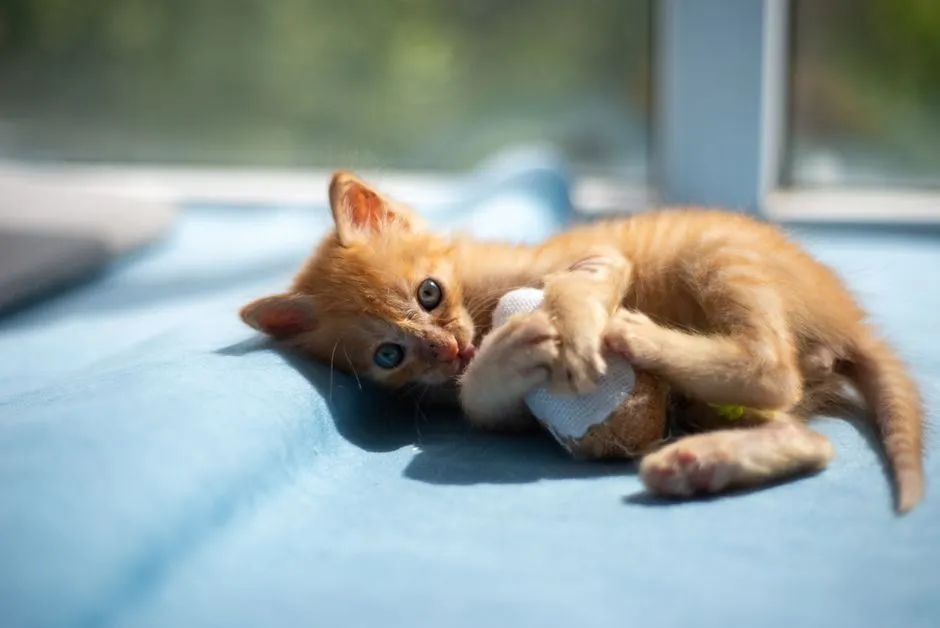
| Plush kickers with sewn (not glued) details | Fine unsupervised | Check seams weekly; no plastic eyes or bells |
| Catnip and silvervine toys, well-made | Fine unsupervised | Filling is the main check — inspect seams |
| Food puzzles and treat balls | Fine unsupervised | Built for solo use; size pieces appropriately |
| Wand teasers with string or ribbon lures | Supervised only | String ingestion risk when left out |
| Feather toys | Supervised only | Feathers detach and get chewed and swallowed |
| Crinkle toys with foil-like film inside | Supervised only | Torn film can be ingested |
| Laser pointers | Supervised only | Eye safety; always end on a physical toy |
| Yarn, ribbon, tinsel, rubber bands, hair ties | Avoid as toys | Classic linear foreign body hazards |
| Toys with glued-on eyes, bells or pom-poms | Avoid | Small parts detach and get swallowed |
| Toys sized for small rodents or birds | Avoid | Often small enough to swallow whole |
Two clarifications on that table:
Laser pointers: an eye issue and a frustration issue
Laser toys are supervised by definition, but the safety notes are different: never shine the beam at a cat's eyes, and always finish the session by landing the "prey" on a physical toy the cat can actually catch. A hunt that never ends in a catch leaves some cats wound up rather than satisfied.
Catnip and silvervine toys: check the seams, not the herb
Catnip and silvervine are both considered safe for cats — the response is genetic and temporary, not a health concern. The safety question with these toys is construction: a determined cat will eventually open a cheaply sewn toy, and then you have loose filling and possibly a rattle insert on the floor. If you're choosing between the two herbs, our catnip vs silvervine comparison covers who responds to what; from a safety standpoint, buy whichever one comes in the better-made toy.
Small Parts: The 30-Second Toy Inspection
String gets the headlines, but detachable small parts cause plenty of trouble too. Before any new toy goes into rotation, give it this check:
- Tug every attached piece. Eyes, noses, bells, feathers, pom-poms, tails. If you can pull it off with moderate force, so can a cat with teeth designed for exactly that.
- Check how details are attached. Embroidered or sewn features beat glued-on plastic every time. Glued parts fail first.
- Squeeze for hidden inserts. Bells, rattles and crinkle film inside a toy are fine while the toy is intact — the question is what happens when the seam goes. Thin fabric plus a hard insert is a toy to retire early.
- Size-check against a swallow. Anything that can pass entirely into a cat's mouth is a hazard. This is why toys made for ferrets, hamsters or birds don't belong in a cat's toy box even when they look similar.
- Sniff test on cheap plastics. A strong chemical smell out of the packaging is a reasonable cue to air the toy out or skip it. There's no useful safety certification system for cat toys the way there is for children's toys, so material quality comes down to the brand's own standards — one more reason we weight construction quality heavily across our toys and play coverage.
Then repeat a fast version of this weekly for toys in active rotation. Toys wear. A kicker that was safe in January may be leaking filling by June. Retiring a $6 toy early is the cheapest insurance in pet ownership.
Kittens Need a Stricter Standard
Everything above applies double to kittens:
- Kittens chew more indiscriminately than adults — they're teething and exploring, and they'll swallow things an adult cat would bat around and abandon.
- Size thresholds shrink. A ball that's safely oversized for an adult cat may be swallowable for a twelve-week-old kitten.
- Hands are not toys. It's a behavior point rather than a toy-safety point, but wrestling with fingers teaches a kitten that skin is prey — a habit that's much harder to undo at a year old. Redirect to a kicker or wand from day one.
While you're kitten-proofing the toy box, extend the same thinking to the rest of the setup: breakaway collars only (never a fixed buckle on a cat), and craft supplies, blind cords and charging cables managed like the string hazards they are.
When to Call the Vet
Toy-related trouble usually announces itself as: vomiting or repeated retching, refusing food, lethargy, a painful belly, straining in the litter box, or visible string at either end. Any of those after a toy has gone missing or turned up damaged is a same-day vet call — linear foreign bodies get worse with waiting, not better. Don't induce vomiting and don't pull visible string; let your vet handle it.
A Safe Toy Rotation, In Practice
Pulling this together into a routine that takes almost no effort:
- Leave out three or four solo-safe toys — a couple of hard balls, an intact kicker, a food puzzle — and rotate them weekly so they stay interesting.
- Store wands, feather teasers and anything with string in a closed drawer or bin between sessions. Closed matters; cats open cabinets.
- Schedule one or two real interactive sessions a day with the supervised toys. Ten minutes of wand play does more for a cat than a floor full of ignored toys.
- Inspect the active rotation weekly and retire anything with a split seam, a loose part or exposed elastic.
Supervision isn't a burden here — the supervised toys are the fun ones. The cats that get regular wand sessions, a rotating toy box and an owner who bins the frayed stuff get the best of both: real play and near-zero risk.