How to Remove Mats From Cat Fur Without Scissors
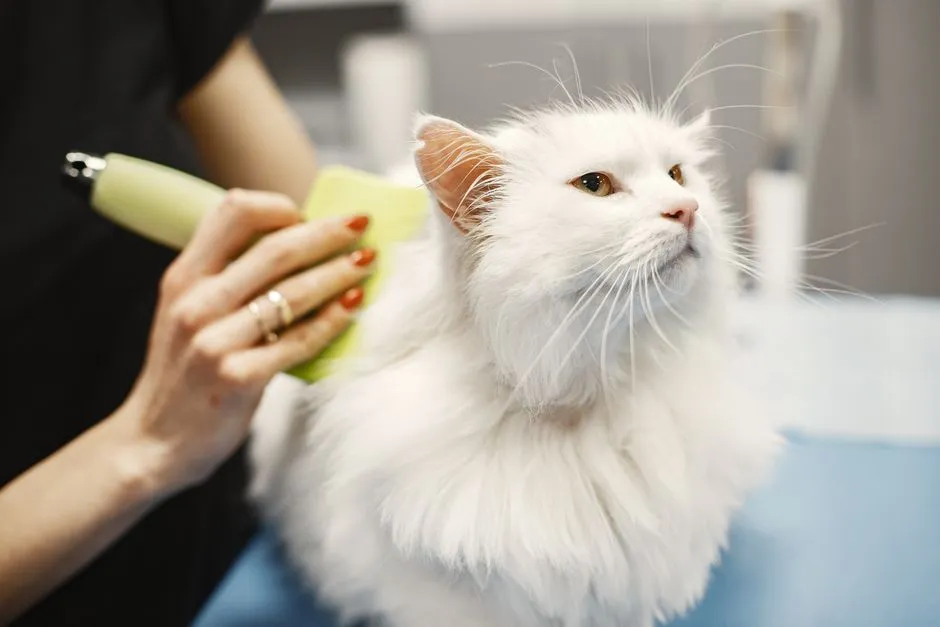
- Can you remove a mat from cat fur at home?
- Is it a loose tangle or a tight mat?
- When should you stop before trying?
- Why are scissors so dangerous near matted fur?
- What tools can you use for one small, loose tangle?
- How do you make one gentle attempt?
- Should you bathe the cat first?
- Why did the mat form?
- How do you prevent mats from returning?
- The safe decision
- Sources
Can you remove a mat from cat fur at home?
Only attempt a small, loose tangle that moves away from the skin and yields to a rounded-tip comb without force. Stop if the patch is tight, painful, large, widespread or attached close to the skin, or if the skin is red, sore, damp or broken. Those cases need a veterinarian or qualified cat groomer. Never put scissors under or beside a mat: thin cat skin can be pulled into the knot where you cannot see it.
This is a triage guide, not a home-clipping lesson. It helps you tell a loose tangle from a mat that needs professional removal, make one gentle attempt when the risk is low, and prevent the next knot.
Is it a loose tangle or a tight mat?
A loose tangle is a small section whose hairs still shift when you touch them. You can lift it away from the skin, see the skin beneath it and work at the hair tips without pulling the cat's body. A tight mat feels like a dense pad. It may sit flat against the skin, involve a broad area or make the cat flinch when the surrounding coat moves.
VCA Animal Hospitals explains that mats in long-haired cats can feel thick or chunky and may be painful or sensitive. Some cause skin inflammation or irritation. Its guidance allows a cautious attempt on a small mat with a comb, mat breaker or dematting tool, but sends large or widespread mats, poor tolerance and any situation where injury is a concern to a veterinarian or groomer.
If you are unsure which description fits, treat the patch as a mat and stop. The cost of being conservative is a professional appointment. The cost of guessing wrong can be torn or cut skin.
When should you stop before trying?
Do not attempt home removal when any of these is true:
- The mat is tight to the skin or you cannot see where skin ends and fur begins.
- It covers a large patch or several areas are matted.
- The cat flinches, cries, bites, scratches or cannot stay comfortable when the area is touched.
- The skin is red, swollen, wet, bleeding, scabbed, smelly or otherwise abnormal.
- The mat is around a very sensitive area such as the armpit, groin, genitals or anus.
- The cat is elderly, unwell or suddenly unable to groom normally.
- You would need scissors, clippers, a blade or force to make progress.
Route skin changes, pain and a sudden grooming decline to a veterinarian. A professional groomer can help with coat maintenance and suitable cases, but a veterinarian is the first call when skin or health is involved, or when pain control or sedation might be needed.
Cats Protection takes an especially cautious position in its long-haired cat grooming advice: do not brush out established mats yourself, do not use scissors and take a matted cat to a veterinarian. That is the safer default for a patch that is more than a loose, movable tangle.
Why are scissors so dangerous near matted fur?
A mat pulls and folds the skin upward. The blade may appear to be passing through hair while skin is trapped inside the dense patch. VCA's instruction is direct: never use scissors to cut off a mat because it is easy to cut skin you cannot see.
This is not solved by using smaller scissors, placing a comb underneath or cutting only the top of the knot. Do not improvise a barrier and do not ask another person to hold a struggling cat while you cut. Put the scissors away and arrange professional removal.
Home clippers are not a safe substitute in this guide. Clippers can nick folded skin, heat during use and frighten the cat. A veterinary team or qualified cat groomer can assess the coat, choose appropriate equipment and stop safely if the cat is painful or distressed.
What tools can you use for one small, loose tangle?
Keep the kit simple:
- A long-toothed metal comb with smooth, rounded tips
- Good light so you can see the skin and the edges of the tangle
- A stable, comfortable surface where the cat can leave
- A reward the cat already likes
Do not begin with a de-shedding edge. Its job is loose undercoat, not mat removal, and excessive passes can irritate skin. Avoid any tool with a damaged tooth, sharp burr, exposed blade or loose part.
Cat Friendly Homes, a Feline Veterinary Medical Association resource, recommends long, even comb teeth with rounded tips and a handle for control. A mat breaker or dematting tool can contain narrow or sharpened working edges. If a simple comb will not move the loose patch, that is a reason to stop, not a reason for a beginner to escalate to a more aggressive tool.
How do you make one gentle attempt?
Proceed only when the patch is small, loose, away from sensitive anatomy, the skin looks normal and the cat is calm.
- Let the cat settle in a familiar place. Do not restrain the cat tightly.
- Separate the loose patch with your fingers and confirm that it lifts away from the skin.
- Hold the fur between the tangle and the skin so the comb's movement does not pull directly on the cat.
- Begin at the outermost hair tips, not at the skin. Make one short, gentle comb pass.
- Work a few hairs at a time only while the comb moves without force.
- Stop immediately if the comb catches firmly, the cat reacts, or the skin begins to move with the tangle.
Cat Friendly Homes' home-grooming tips similarly advise working from the fur tips, isolating the section and holding the mat to reduce tugging. The page also says to consult a veterinarian when a mat is too large, dense or close to the skin.
Success means the small tangle separates with light work and the skin remains comfortable. It does not mean persisting until a difficult patch is gone. Split the job across short sessions if the coat is clear enough to wait, or book professional help.
Should you bathe the cat first?
Do not bathe a tangled cat before assessing the coat. VCA's broader cat coat-care guide warns that tangles can become impossible to remove after a bath. Water also makes it harder to judge what is happening inside a dense patch.
Why did the mat form?
Long hair tangles readily in high-movement areas, including under the legs, around the back end, on the chest and near the collar. VCA also notes that dental pain, obesity and arthritis can reduce a cat's ability or willingness to groom particular areas.
One mat does not prove there is a medical problem. A sudden cluster of mats, a greasy or patchy coat, reduced grooming, sensitivity or difficulty reaching part of the body does justify a veterinary check. Removing the knot without addressing pain or limited mobility sets up the same problem again.
How do you prevent mats from returning?
Check a long coat every day with your hands and a rounded-tip, long-toothed comb. Pay attention behind the ears, under the legs and around other moving areas. Frequent short sessions are easier on the cat and find tangles while they are still loose.
Use a brush chosen for the coat after the comb passes freely. Our published guide on how to choose a cat brush separates surface-hair, long-coat and undercoat jobs. A de-shedding tool is optional and should not be used repeatedly over one area.
If the cat cannot tolerate routine grooming, ask a veterinarian or qualified cat groomer for a handling and maintenance plan. Do not wait for another painful mat to make the decision urgent.
The safe decision
At home, limit yourself to a small, loose tangle that lifts from healthy skin and moves under a rounded-tip comb without force. Stop at resistance, discomfort or uncertainty. A tight, painful, large, widespread or skin-involved mat belongs with a veterinarian or qualified cat groomer.
Never use scissors near matted cat fur, do not improvise with blades or home clipping, and do not treat distress as a handling problem to overpower. Gentle prevention is home care. Established matting is professional work.