Cat Grooming Kit: What You Need and What to Skip
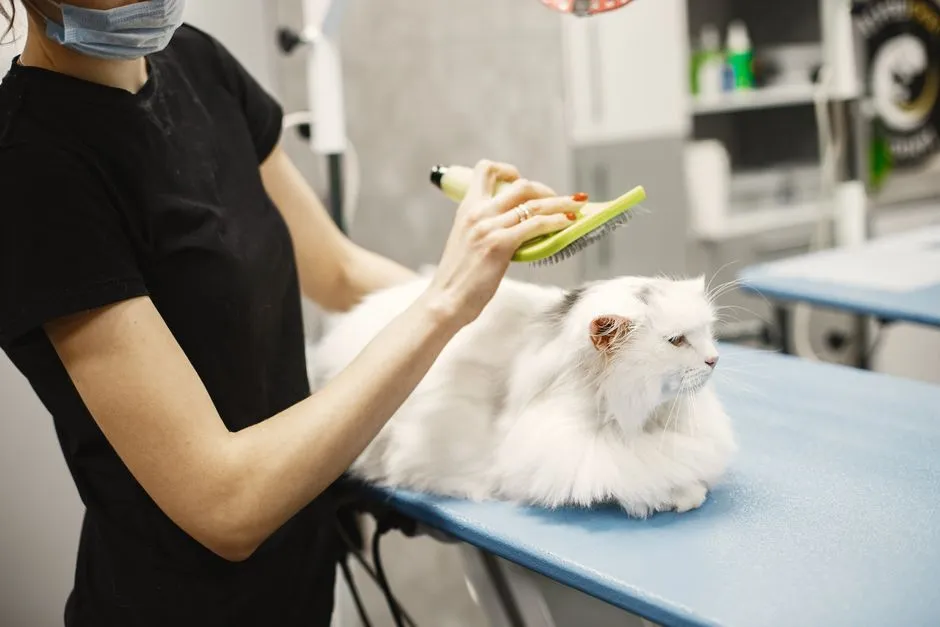
- What belongs in a cat grooming kit?
- Buy the kit in this order
- Match the first tool to the coat
- Treat a deshedding tool as an optional specialist
- Add nail supplies without duplicating the whole nail guide
- Use a stable surface, not a restraint collection
- Which extras are actually worth buying?
- What should you skip?
- Inspect before you groom
- A five-minute kit audit
- Sources
What belongs in a cat grooming kit?
A useful cat grooming kit contains one coat-matched brush or comb, cat nail clippers, a non-slip towel or mat, good light, and a reward your cat values. Add a deshedding tool, cat shampoo, dental supplies, or ear cleaner only when the cat has that specific need. Do not buy scissors for mats. Large, tight, painful, or skin-level mats belong with a veterinarian or qualified cat groomer.
The best kit is not the case with the most attachments. It is the small set that fits your cat's coat, handles the jobs you actually do, and can be used without forcing the cat through a long session.
Buy the kit in this order
| Priority | Item | Job | Who needs it |
|---|---|---|---|
| 1 | Coat-matched brush or comb | Loose hair, minor tangles, and coat checks | Every cat, with the tool chosen by coat |
| 2 | Small cat nail clippers | Conservative nail-tip trims | Most indoor cats, unless trims are outsourced |
| 3 | Non-slip towel or mat | A stable, familiar work surface | Every home setup |
| 4 | Reward and bright task light | Short positive sessions and a clear view | Every home setup |
| 5 | One problem-specific extra | Heavy shedding, bathing, dental care, or another defined job | Only when that job exists |
This order prevents a common shopping mistake: buying three tools that all remove surface hair while owning nothing that can check a long coat down to the skin. If shedding is the main concern, compare tool types in our desk-researched guide to cat brushes for shedding. If the coat is not the main concern, spend the next part of the budget on a stable setup and a sharp nail tool instead.
Match the first tool to the coat
Start by parting the coat in several places. Look at its length, density, and whether a fine underlayer sits beneath the outer hairs. Breed labels can be useful clues, but the coat in front of you makes the decision.
| Coat or problem | Sensible first tool | What it should do | What it cannot prove |
|---|---|---|---|
| Short coat or sparse undercoat | Rubber curry or stiff-bristle cat brush | Lift loose surface hair with gentle passes | That a skin change or sudden shedding is harmless |
| Medium or long coat | Long-toothed metal comb or brush | Reach through the length and find minor tangles | That a slick-looking top layer is free of mats below |
| Long coat with light tangles | Long-toothed comb, with a suitable slicker as an optional second tool | Separate loose hair and maintain the outer coat | That a tight mat can safely be pulled out |
| Dense coat in a heavy shed | Normal coat tool first; compatible undercoat or deshedding tool only if needed | Remove loose undercoat without replacing routine brushing | That more passes are better |
| Cat learning to accept grooming | Soft brush or grooming glove | Build tolerance to touch and movement | That it will manage a dense undercoat or existing mats |
VCA's current coat-care guide identifies stiff bristles for short or sparse coats and long-toothed metal tools for medium and long coats. It also says the tool should be used gently and without excessive pulling. Our fuller cat-brush chooser explains the trade-offs without turning this kit guide into a second brush encyclopedia.
Before paying, run the chosen tool over the inside of your forearm with the pressure you intend to use. This is only a rough check for an exposed sharp edge or damaged pin; human skin cannot certify that a tool suits a particular cat. Check the handle, pin bed, teeth, and seams again after cleaning and replace a tool that is bent, rusty, cracked, or difficult to control.
Treat a deshedding tool as an optional specialist
An undercoat or deshedding tool is not the default brush. It belongs in the kit when the cat has a compatible shedding coat and an ordinary brush or comb is not managing loose undercoat. Confirm the coat type, tool size, use frequency, and exclusions in that exact product's instructions.
The manufacturer's current FURminator cat-tool instructions are product-specific, not a universal rule for every deshedder. They say deep or rough brushing can irritate skin, advise fewer long and gentle strokes rather than repeated strokes in one place, and say to stop if redness or irritation appears. That supports a broader buying rule: reject a deshedding tool whose instructions do not clearly describe compatible coats, pressure, inspection, cleaning, and stop signals.
Do not use a deshedder to attack a mat. Work from the normal brush or comb, and stop if the teeth catch, the skin moves with the hair, or the cat reacts as though the area is painful. A tool that removes an impressive pile can still be the wrong tool or be used too aggressively.
Add nail supplies without duplicating the whole nail guide
For nail care, the kit needs small, sharp clippers made for cat claws. Scissor-style and guillotine-style versions both exist; visibility, hand comfort, blade condition, and the cat's tolerance matter more than the packaging promise. Keep clean gauze nearby. If a veterinarian has shown you how and recommends it for your cat, keep a pet styptic product available and follow its label.
The pink quick contains blood vessels and nerves, so nail work needs good light and a conservative view of the tip. Do not guess at a dark nail or continue while the cat struggles. Our step-by-step cat nail guide owns the technique, paw handling, and decision to outsource. A veterinary team or qualified groomer is the right route when a nail curls toward the pad, splits, bleeds persistently, or is accompanied by swelling, discharge, limping, or pain.
VCA's current kitten grooming guide uses a gradual sequence: first accept paw contact, then the clipper's presence and sound, then one nail before building toward more. It also recommends gentle restraint and veterinary help when struggling makes the process unsafe. That sequence is more useful than buying a louder grinder because the first clipper session went badly.
Use a stable surface, not a restraint collection
A folded towel or washable non-slip mat gives the paws traction and defines the grooming place. Put it on the floor or another broad, stable surface from which a fall is unlikely. Set the brush, clippers, gauze, waste bag, and reward within reach before the cat arrives. Good light should reveal the coat and nails without shining into the cat's eyes.
Frequent short sessions are better than infrequent long ones, according to the Feline Veterinary Medical Association's Cat Friendly Homes grooming guidance. Start in an area the cat usually accepts, use a few gentle passes, reward, and finish before tolerance collapses. Do not pin, scruff, or pursue a cat to complete a checklist.
Stop when the cat repeatedly turns toward the tool, tries to leave, stiffens, flattens the ears, lashes the tail, vocalizes, swats, or bites. A sudden change in tolerance can reflect pain or illness rather than stubbornness.
Which extras are actually worth buying?
Optional does not mean useless. It means the item needs a defined job.
| Optional item | Add it when | Buying boundary |
|---|---|---|
| Flea comb | You need to inspect for flea dirt or remove visible debris while arranging veterinary parasite advice | It does not diagnose the cause of itching or replace a vet-recommended prevention plan |
| Cat shampoo | A veterinarian recommends bathing, or an otherwise healthy cat has a specific washable mess | Use only a product labelled for cats and follow its directions; most healthy adult cats rarely need baths |
| Cat toothbrush and cat toothpaste | Dental care is part of a veterinarian-guided routine | Keep it separate from coat tools and never use human toothpaste |
| Grooming glove | The cat accepts stroking but not a conventional brush | Treat it as a tolerance or surface-hair tool, not proof that a long coat is tangle-free |
| Pet clippers | A veterinarian or qualified groomer has recommended home clipping and taught the safe boundary | They are not a beginner substitute for professional mat removal |
| Ear cleaner and gauze | A veterinarian has identified a need and selected an appropriate product | Routine ear cleaning is unnecessary for many cats; pain, redness, odor, or debris needs veterinary assessment |
VCA says most healthy adult cats rarely require bathing and recommends shampoo formulated for cats rather than human or baby shampoo. Its kitten guide also says cats generally do not need routine ear cleaning and routes debris, redness, or scratches around the ear to veterinary assessment. Those facts make shampoo and ear cleaner conditional supplies, not automatic slots in every kit.
Dental care is a real routine, but it is easier to maintain when stored as its own small kit. The brush and paste should be made for pets and introduced gradually. Mouth pain, bleeding, difficulty eating, drooling, or a new refusal of facial handling is not a shopping problem; ask a veterinarian to assess it.
What should you skip?
Leave these out of a general home cat-grooming kit:
- Scissors for mats. Cat skin can be pulled into a mat and hidden from view. VCA advises clippers rather than scissors and recommends a groomer or veterinarian for severe or extensive tangles.
- Unlabelled blades, rakes, and mystery attachments. If the seller cannot identify the intended coat, safe technique, cleaning method, and replacement parts, the low price has not solved the uncertainty.
- Human shampoo and human toothpaste. Products designed to be rinsed or spat out by people are not substitutes for cat-labelled products.
- Perfume, essential-oil coat spray, and deodorizing powder. Fragrance does not diagnose the reason a coat smells different, and a cat will lick residue from its fur.
- Cotton swabs for the ear canal. Ear debris needs the correct cause and product, not deeper probing.
- A pile of duplicate brushes. Add a second coat tool only when it performs a different, observed job.
Also skip any plan that requires the cat to tolerate every service in one sitting. Brushing, nails, dental care, and an occasional bath can be separate routines on separate days.
Inspect before you groom
Run your hands lightly over the coat before picking up a tool. Look for redness, wounds, scabs, bald areas, parasites, discharge, swelling, lumps, painful spots, and changes in coat condition. Check behind the ears, under the front legs, around the hind legs, and anywhere the coat rubs or moves.
Do not groom directly over a wound, inflamed skin, a new lump, or a painful area. Contact a veterinarian about excessive grooming, bald patches, dermatitis, a sudden fall in self-grooming, repeated mats in a previously manageable coat, or a marked change in shedding. Cat Friendly Homes notes that poor grooming can be an early sign of disease and that age, obesity, chronic illness, dental disease, and breed characteristics can change the help a cat needs.
Large, dense, widespread, wet, foul-smelling, or skin-level mats also need professional assessment. Never sedate a cat with a human medication or an unprescribed product to make grooming possible. A veterinarian decides whether medication or clinical grooming is appropriate.
A five-minute kit audit
Every month or after any difficult session, ask:
- Does each tool have one clear job?
- Does the coat tool reach the intended layer without dragging skin?
- Are teeth, pins, blades, handles, and guards intact and clean?
- Can the cat leave, and are sessions ending before fear or aggression escalates?
- Has the coat, skin, nail, mouth, ear, mobility, or grooming behavior changed enough to need a veterinarian?
If one tool repeatedly causes redness, catches hair, or makes the cat avoid a previously accepted routine, stop using it. The answer may be a different size or design, gentler technique, professional grooming, or a health assessment. It is not automatically a larger kit.
Sources
- VCA Animal Hospitals, Grooming and Coat Care for Your Cat - supports coat-matched tool types, gentle use, mat-removal limits, infrequent bathing for most healthy adult cats, and cat-specific shampoo. Accessed September 4, 2026.
- VCA Animal Hospitals, Get into a grooming routine with your kitten - supports gradual handling, nail-tool introduction, gentle restraint, cat dental products, and the boundary against routine ear cleaning. Accessed September 4, 2026.
- Cat Friendly Homes, Grooming Tips - supports short predictable sessions, rewards, coat inspection, and veterinary assessment for grooming or skin changes. Accessed September 4, 2026.
- FURminator, Undercoat deShedding Tool instructions - supports the named product's pressure, repeated-stroke, skin-inspection, and irritation stop instructions; it is not generalized into a schedule for all deshedding tools. Accessed September 4, 2026.