Is a FURminator Worth It for Cats?
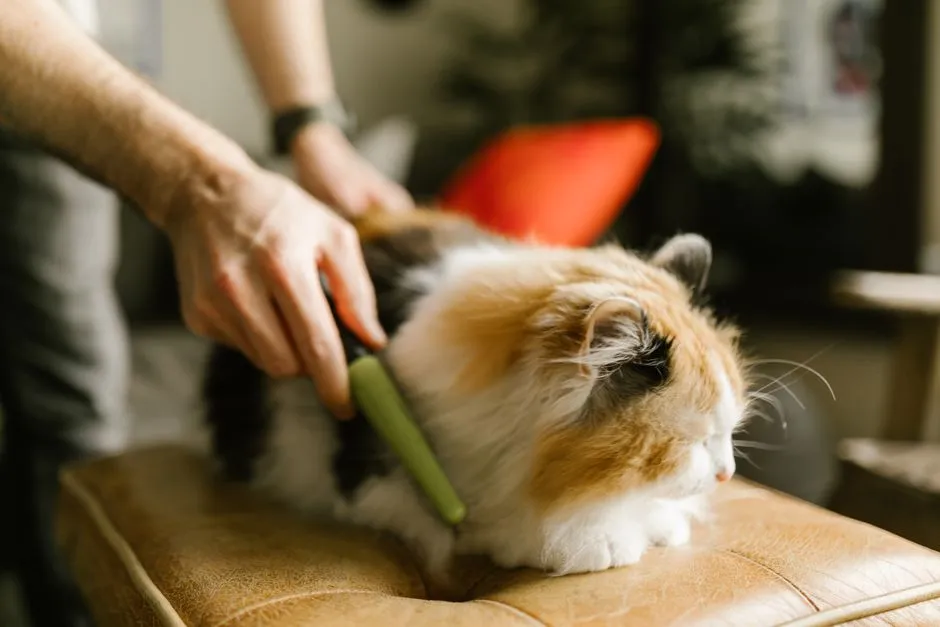
- Is a FURminator worth it for cats?
- What does the FURminator actually do?
- Where does it shine?
- When is it too much tool?
- FURminator versus a slicker brush or comb
- Can a cheaper regular brush do the job?
- Which FURminator version fits a cat?
- How should you use it without overdoing it?
- The buying verdict
- Sources
Is a FURminator worth it for cats?
A FURminator can be worth it for a cat that sheds a noticeable undercoat, accepts grooming calmly and already has a separate brush or comb for routine coat care. It is probably too much tool for a cat with sensitive skin, little undercoat or only modest shedding. It is also the wrong tool for removing mats. The value is not the amount of fur it can pull in one sitting; it is whether it solves a specific shedding problem without irritating the cat.
This comparison is desk-researched from the manufacturer's directions and veterinary grooming guidance. We have not performed a hands-on product test. The criteria are coat fit, task fit, tolerance, safety and whether a simpler tool can do the same job.
What does the FURminator actually do?
The cat FURminator is an undercoat de-shedding tool, not an all-purpose brush. The manufacturer says its stainless-steel edge passes through the topcoat to collect loose undercoat. Its directions for the cat de-shedding tool explicitly distinguish de-shedding from brushing or combing.
That distinction matters because ordinary grooming has more than one job. A brush may lift loose surface hair and distribute skin oils. A long-toothed metal comb can help smooth minor tangles in a medium- or long-haired coat. A de-shedding edge has a narrower purpose: removing loose, dead undercoat from an animal that has one.
VCA's veterinary guide to grooming and coat care for cats explains that coat types vary substantially. Most breeds have guard hairs over a fine undercoat, but some cats shed very little, while long, silky coats can tangle easily. The right purchase therefore begins with the individual coat, not the popularity of the tool.
Where does it shine?
The strongest use case is a healthy, shedding cat with a real undercoat and an owner who is already brushing or combing regularly. In that setting, a de-shedding tool can add a targeted undercoat pass when loose fur builds up.
It is most persuasive when all four of these statements are true:
- You can feel and see loose undercoat after ordinary brushing.
- Your cat accepts gentle, brief grooming without trying to escape.
- A coat-appropriate brush or comb is already handling surface hair and small tangles.
- You are willing to stop based on the cat's skin and behaviour rather than chasing a dramatic pile of fur.
The last point is the important one. A large fur pile looks satisfying, but it is not a safety target and does not prove that more strokes are better.
If you are still choosing the everyday tool, start with our criteria-led guide to the best cat brushes for shedding. A FURminator makes more sense as the specialist member of a small grooming kit than as the only tool in it.
When is it too much tool?
The manufacturer says the undercoat tool should not be used on non-shedding animals or pets with particularly sensitive skin. Its instructions also say to inspect for sores, bruises and skin conditions first, remove tangles or mats before de-shedding, use gentle strokes in the direction of hair growth, avoid excessive passes over one area and stop if redness or irritation appears.
Those are not fine-print cautions. They define the cats for whom the product is a poor fit.
Skip the tool and ask your veterinarian about grooming when your cat has redness, sores, bruising, unexplained hair loss, obvious tenderness or another skin problem. Cornell's Feline Health Center notes that brushing and combing also provide a chance to monitor the skin for parasites and signs of disease. A grooming device should not be used to work through a health issue.
Do not use a de-shedding edge to attack a mat. VCA advises gentle brushing or combing only for small, minor tangles and recommends professional care for severe or extensive tangles. It also warns against using scissors because a cat's skin can be cut accidentally. Mats can hide irritated skin, and pulling at them can be painful.
The tool is also a weak buy when a soft brush or comb already removes the small amount of loose hair your cat produces. Specialist equipment earns its place by solving a specialist problem.
FURminator versus a slicker brush or comb
These tools overlap, but they are not interchangeable.
| Tool | Best considered for | Main limitation |
|---|---|---|
| FURminator-style de-shedding tool | A deliberate pass through loose undercoat on a shedding cat | Can irritate skin if pressure, repetition or frequency is excessive; not for mats |
| Long-toothed metal comb | Medium or long coats, loose hair and minor tangles | May not collect undercoat as aggressively as a de-shedding edge |
| Bristle brush | Routine loose-hair removal on short coats or sparse undercoats | Less targeted when a dense undercoat is shedding heavily |
| Slicker-style brush | Surface grooming and separating coat, depending on pin length and coat | Fine pins still require gentle pressure and may not suit every cat |
The veterinary evidence is strongest for matching the tool to coat type and using it gently, not for declaring one format universally superior. Our guide to choosing a cat brush by coat type goes deeper into that task-by-task distinction.
For a long-haired cat that tangles, a metal comb may deserve priority because tangle prevention is a daily maintenance problem. For a short-haired cat with a sparse undercoat, VCA specifically identifies a stiff bristle brush as useful. For a cat that produces obvious loose undercoat even after routine brushing, the de-shedding tool has the clearest extra role.
Can a cheaper regular brush do the job?
Often, yes. If the goal is ordinary coat maintenance, modest loose-hair removal or minor-tangle prevention, a basic coat-appropriate brush or metal comb may cover it. Those formats are widely available at different prices, so compare the current local price of a suitable brush with the cat-specific FURminator rather than assuming the branded tool is automatically better value.
Use this buying sequence:
- Identify the job: surface hair, loose undercoat or minor tangles.
- Match the tool to the coat, using veterinary guidance rather than packaging alone.
- Try the least specialised tool that fully handles the job.
- Add a de-shedding tool only if loose undercoat remains a recurring problem.
This avoids buying a powerful undercoat tool for a cat whose real need is a gentle daily comb. It also leaves room in the budget for the tool that will be used most often.
Which FURminator version fits a cat?
The brand sells cat tools divided by hair length and body size. Its cat tool selector separates small and medium/large cats, then long- and short-haired coats. Buy the cat-specific version that matches both characteristics rather than choosing a dog model or treating every edge as identical.
The label still cannot diagnose the coat. If you are uncertain whether your cat has an undercoat, or the skin is unusually sensitive, ask your veterinary team to show you an appropriate grooming tool. VCA notes that a veterinary healthcare team can make recommendations for an individual cat.
Check the edge before each session. Bent or damaged teeth are a reason not to use it. The manufacturer's care instructions say to clean the edge with warm water and mild soap when necessary, dry it completely before storage and protect it from falls that can damage the teeth.
How should you use it without overdoing it?
Start with a dry, untangled coat and a calm cat. Inspect the skin and coat first. Use fewer, long and gentle strokes in the direction of hair growth, with extra care around the stomach, legs and other sensitive areas. Do not bear down or repeatedly scrape one patch.
The manufacturer recommends one or two sessions a week, generally 10 to 20 minutes depending on coat and condition. Treat that as the brand's general range, not a requirement to keep going for a set duration. A cat that becomes tense, flicks the skin, turns toward the tool or tries to leave is giving you a reason to pause. End immediately if you see redness or irritation.
Short, cooperative grooming is preferable to completing a schedule while the cat is distressed. If the cat will not tolerate the tool, a different brush, a veterinary technician or a professional cat groomer is a better route than restraint and persistence.
The buying verdict
The FURminator is worth considering for a healthy cat with a shedding undercoat when an ordinary brush leaves a recurring layer of loose fur. Its advantage is a specific undercoat-removal task, not universal superiority over brushes and combs.
Pass on it when the cat has sensitive or unhealthy skin, little undercoat, mats, low grooming tolerance or no shedding problem that a simpler tool cannot handle. Whichever tool you choose, gentle technique and the cat's response matter more than the brand name. Stop at irritation, route skin concerns to a veterinarian and let the coat decide whether a specialist tool has earned a place in the drawer.