How to Get a Cat Into a Carrier Without a Fight
The Short Version
Getting a cat into a carrier without a fight comes down to three things: leave the carrier out permanently so it stops predicting the vet, load the cat rear-first or through a top hatch instead of pushing them face-first at a dark box, and stay calm and quick rather than slow and apologetic. Most carrier battles are lost before they start — the carrier comes out of the closet, the cat hears the zipper, and the chase begins. Change what the carrier means to your cat and the fight mostly disappears.
This guide covers the fast method for a vet appointment that's happening today, the training method that fixes the problem for good, and the carrier features that make loading dramatically easier. If you're still shopping, our cat carrier buying guide covers sizing, hard versus soft construction and airline rules in full.
Why Cats Fight the Carrier
Cats aren't being difficult for sport. From their side, the sequence is entirely rational:
- The carrier only appears before bad things. If it comes out of storage exclusively for vet visits, your cat has learned the pattern perfectly. The carrier is the vet.
- Being pushed head-first into a dark enclosed space triggers a survival response. A cat facing an opening they can't see into will brace all four legs against the rim — and a braced cat is stronger than you'd believe.
- Your stress leaks. Cats read tension in your movements and voice. If you approach with the grim energy of someone about to do something unpleasant, the cat knows before you're within reach.
- Chasing makes it worse. Every failed grab teaches the cat that fleeing works and that hands approaching near the carrier mean trouble.
None of this is fixed by force. It's fixed by changing the associations — and by better loading technique in the meantime.
The Fix That Actually Works: Leave It Out
Carrier training is the unglamorous answer, and it works better than any technique or calming spray. The goal is to make the carrier a neutral or even pleasant piece of furniture.
Make It Part of the Room
Put the carrier somewhere your cat already spends time — near a favorite sleeping spot, not shoved in a corner facing a wall. Take the door off entirely, or fix it open so it can't swing shut and startle anyone. Line the bottom with a folded towel or a piece of your worn clothing.
Then ignore it. Most cats will investigate within a few days once the carrier stops being an event.
Build Positive Deposits
- Feed near it, then in it. Move the food bowl progressively closer over a week or two, then place it just inside the opening, then at the back.
- Toss treats in casually as you walk past. Don't hover waiting for the cat to go in — that reads as a trap.
- Let sleeping cats lie. If your cat starts napping in the carrier, you've won. Don't close the door the first time it happens.
- Practice short, boring trips. Once the cat enters voluntarily, occasionally close the door for a few seconds, then a minute, then a carry around the house — released each time with a treat and nothing bad happening.
A few weeks of this and the carrier stops predicting anything. Cats that have been carrier-trained often walk in on their own when the door opens.
Worth Knowing
Carrier training has one honest limitation: it takes weeks, and it can partially unravel after a genuinely bad experience like a painful procedure or a long stressful trip. Expect to top it up with feeding-and-treats maintenance after every vet visit rather than treating it as a one-time fix.
The Appointment Is Today: Fast Methods That Work
No time for training? These techniques get a reluctant — not aggressive — cat loaded with minimal drama.
Set the Stage First
- Prepare the carrier out of sight, in a closed room the cat isn't in. Door open or lid off, towel inside.
- Close doors to hiding spots — the under-bed gap is the battlefield you want to avoid entirely.
- Act completely normal. No calling the cat in a strained voice, no meaningful glances at the carrier. Pick the cat up calmly a few minutes before you need to, as if heading for a cuddle.
- Move to the small room (bathroom is ideal) and shut the door behind you before the carrier enters the picture.
Rear-First Loading
The single most effective technique for front-loading carriers. Hold the cat facing away from the carrier — one hand under the chest, one supporting the back legs — and lower them in tail-first. The cat can't see the enclosed space coming, can't brace against the rim, and is inside before the objection registers. Close the door promptly and calmly.
Top-Loading
If your carrier opens from the top, stand it stable, lift the cat with support under the hindquarters and lower them straight down through the hatch. Gravity does most of the work and there's no rim to brace against. This is the main reason we recommend top-hatch models so strongly in our carriers and travel coverage.
The Towel Wrap
For cats who turn into a blur of legs: place a large towel flat, set the cat in the middle facing away from you, and wrap snugly — one side, then the other, like a burrito with the head out. A properly wrapped cat can't spread-eagle, and many settle noticeably once wrapped. Lower the bundle into a top-loading carrier or slide it rear-first into a front-loader, then loosen the towel and let the cat free themselves inside. The towel stays in as bedding.
Vertical Tip for Front-Loaders
A carrier with only a front door can be stood on its end so the door faces the ceiling, turning it into a temporary top-loader. Lower the cat in hind-end first, close the door, then gently tip the carrier level. Support the carrier well while it's upright — a wobble undoes your calm act instantly.
Carrier Features That Make Loading Easier
Technique matters less when the equipment is on your side. Here's how common carrier designs compare purely on how easily a reluctant cat goes in and comes out:
| Feature | Loading ease | Why it matters | Watch out for |
|---|---|---|---|
| Top hatch + front door | Best | Gravity-assisted loading; no rim to brace against | Check the hatch opening is genuinely cat-width, not a token flap |
| Removable top half (hard-sided) | Best for vet visits | Vet can examine the cat sitting in the base — no dragging out | Clips vary in quality; flimsy ones pop under a determined cat |
| Front door only, hard-sided | Workable | Rear-first loading works well; can be up-ended | Heaviest to carry; up-ending needs two steady hands |
| Soft-sided, multiple zip panels | Good | Side and top access; light to carry | Zippers can be forced by strong cats — look for locking pulls |
| Cardboard carrier | Poor | Fine as an emergency spare | Not escape-proof, not washable, fails when wet |
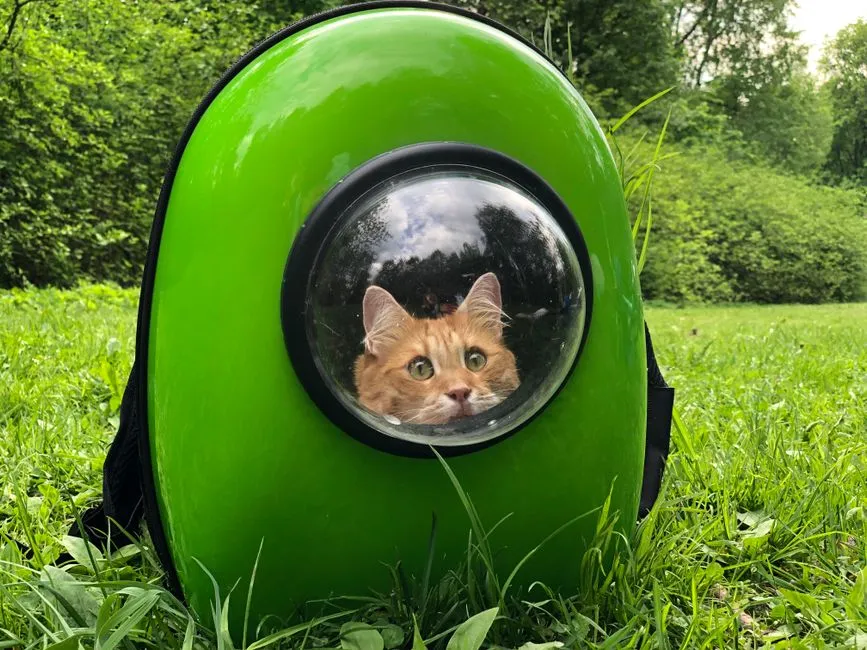
If you're weighing a backpack-style carrier instead, loading is only one of the questions — ventilation and stability matter more, and we go through the full checklist in are cat backpack carriers safe?
Calming Aids: Honest Expectations
- Synthetic feline pheromone sprays (sprayed in the carrier 10–15 minutes before loading, never on the cat) help some cats settle somewhat. They're a nudge, not a switch — worth trying, not worth relying on alone.
- A familiar-smelling towel from the cat's usual sleeping spot is free and about as effective as anything you can buy.
- Covering the carrier with a light towel once the cat is inside reduces visual stress for many cats during the car ride.
- Catnip or silvervine can make the carrier more inviting during training, though a few cats get more revved up rather than less.
- Prescription calming medication exists for cats with genuine travel panic — that's a conversation for your vet, not a product to source yourself.
What Not to Do
- Don't drag a cat out from under furniture. You'll lose, someone may get scratched, and the next attempt gets harder. Close off hiding spots beforehand instead.
- Don't force a cat face-first through a front door while they brace. That's the fight you were trying to avoid.
- Don't dump the cat out at the vet. Use a removable-top carrier or let the cat exit on their own terms.
- Don't punish or scold after a failed attempt — it only deepens the association you're trying to break.
- Don't skip the carrier for "just a short trip." An unrestrained cat in a car is dangerous for everyone, and a cat that escapes at the destination may not be recoverable.
If your cat's carrier panic comes with drooling, vomiting or full-body trembling on every trip, mention it to your vet — genuine travel anxiety and motion sickness are treatable, and no loading technique fixes those on its own.
The Bottom Line
Leave the carrier out year-round, feed near it, and load rear-first or top-down when the day comes. Those three habits solve the overwhelming majority of carrier fights. And if your current carrier makes all of this harder than it needs to be — front-door-only, flimsy zippers, no top access — a better-designed one is a modest purchase that pays for itself in unscratched arms; our cat carrier buying guide will help you pick.