How to Reduce Cat Shedding: 9 Habits That Actually Work
How Do You Actually Reduce Cat Shedding?
You can't stop a healthy cat from shedding — it's how a coat renews itself — but you can dramatically reduce how much of that hair ends up on your sofa. The formula is simple and unglamorous: remove loose hair from the cat before it falls off, support the coat from the inside with good food and hydration, and manage the hair that escapes anyway.
Everything in this guide hangs off that formula. The nine habits below are ordered roughly by impact: the first few do most of the work, the later ones close the gap. None of them require wrestling your cat into a bathtub.
One caveat before we start: this guide is about normal shedding. If your cat has bald patches, scabs, dandruff flurries, or is suddenly shedding far more than usual, that's a vet conversation, not a grooming-tool problem. More on the warning signs below.
Why Is My Cat Shedding So Much?
Shedding volume comes down to a handful of factors, most of them normal:
- Coat type. Double-coated breeds and long-haired cats carry far more undercoat, and undercoat is what ends up on your clothes. A short-haired single-coated cat will never shed like a Maine Coon.
- Season and light. Coat growth cycles are driven largely by day length. Outdoor cats blow their undercoat in dramatic spring and fall molts; indoor cats living under artificial light tend to shed moderately all year, which is why "shedding season" can feel permanent.
- Diet and hydration. A dull, brittle coat drops more hair. Skin and coat quality track closely with overall nutrition and water intake.
- Stress. Cats shed noticeably during stressful moments — you've probably seen the puff of hair at a vet visit. Chronic stress can keep shedding elevated.
- Age and weight. Senior and overweight cats often can't groom their whole body, so loose hair accumulates instead of being swallowed or worked free.
When it's not normal: bald spots, broken skin, excessive licking of one area, clumps coming out, or a sudden change in volume can signal fleas, allergies, thyroid issues, or pain. Those need a veterinarian, not a better brush.
The 9 Habits That Reduce Shedding
1. Brush on a schedule, not when the hair gets bad
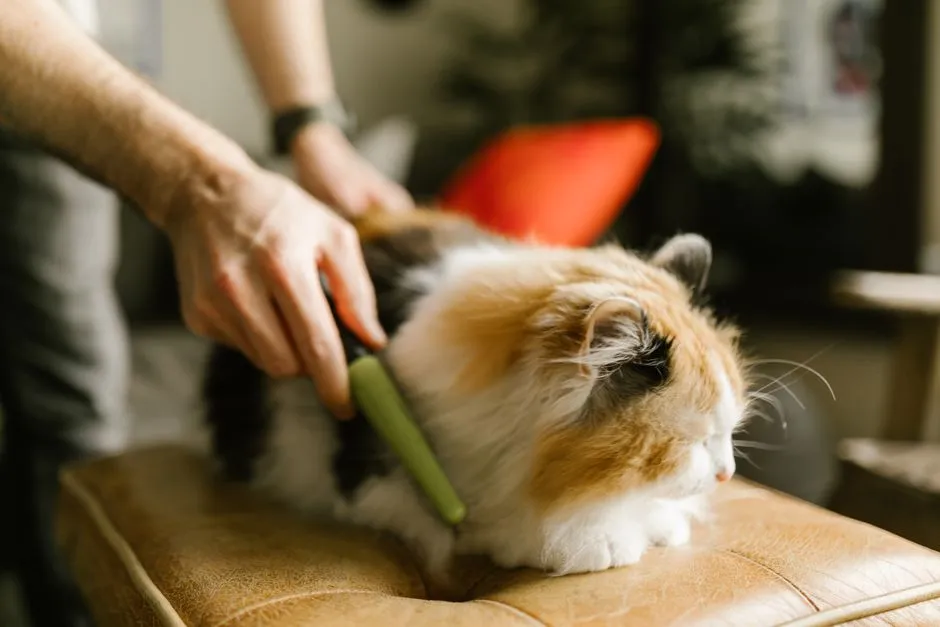
This is the single highest-impact habit. Every hair you capture in a brush is a hair that doesn't land on your furniture — and unlike most shedding advice, the effect is immediate and visible in the brush.
The schedule matters more than the session length. A few minutes every day or two beats a heroic half-hour once a month, because loose undercoat builds up continuously and, in long coats, starts matting if you leave it.
| Coat type | Sensible baseline | During heavy shedding |
|---|---|---|
| Short, single coat | 1–2× per week | 3–4× per week |
| Short, dense/double coat | 2–3× per week | Daily |
| Medium to long coat | 3–4× per week | Daily |
| Long, fine, mat-prone coat | Daily | Daily, plus comb checks |
2. Match the tool to the coat
A brush that suits your cat's coat removes several times more loose hair per session — and gets tolerated better — than a generic one. Broad strokes: slicker brushes and rubber grooming tools suit most short coats, while long and double coats usually need a wide-toothed comb plus an undercoat tool. Our guide to choosing a cat brush by coat type walks through the matching in detail, and our best cat brushes for shedding roundup covers specific deshedding picks.
Worth knowing: deshedding tools with fine metal teeth are effective precisely because they're aggressive. Used too often, with too much pressure, or on thin-coated areas like the belly and legs, they can irritate skin and thin a healthy coat. A couple of passes per area, a couple of times a week, is plenty for most cats.
3. Keep sessions short, gentle and rewarding
A cat that enjoys brushing lets you do it daily. A cat that's been pinned down for a marathon session hides at the sight of the brush, and then no schedule survives.
- Stop at 3–5 minutes, before your cat asks you to.
- Brush with the coat's direction; save any against-the-grain work for cats who demonstrably enjoy it.
- Pair sessions with treats or a meal so the brush predicts good things.
- Skip the belly and back legs until trust is high — most cats guard them.
4. Feed for the coat you want
Coat quality is built at the food bowl. A complete, balanced diet — which any reputable commercial cat food labeled as complete provides — supplies the protein and fatty acids a coat needs. Diets rich in omega-3 fatty acids are widely associated with better skin and coat condition, which generally means less breakage and less loose hair.
If you're considering fish-oil or skin-and-coat supplements, run it past your vet first: dosing matters, and a supplement can't fix shedding caused by an underlying condition.
5. Get more water into your cat
Dehydrated skin makes for a dry, flaky, faster-shedding coat, and cats are famously poor drinkers — a leftover of their desert ancestry. Two practical levers:
- Wet food. Even a partial switch meaningfully raises daily water intake.
- Running water. Many cats drink noticeably more from a fountain than a still bowl. If your cat ignores the water dish, our cat water fountain guide covers materials, pump noise and — critically — which designs you'll actually keep clean.
6. Keep the household calm and predictable
Stress shedding is real, and chronic low-grade stress — a new pet, construction noise, a bored indoor cat with nothing to do — keeps it elevated. You can't eliminate stress, but routines help: consistent feeding times, safe elevated perches, daily play, and undisturbed retreat spots. A calmer cat also grooms itself more effectively, which does some of your brushing for you.
7. Use a damp hand or grooming wipe between brushings
Most cats never need a bath, and bathing a cat for shedding is usually more trauma than it's worth. A faster trick: wet your hands slightly and stroke the cat from head to tail. Loose surface hair clings to damp skin instead of drifting onto the couch. Pet-specific grooming wipes do the same job. It takes thirty seconds and most cats read it as petting.
8. Manage the hair that escapes anyway
No routine captures everything, so make cleanup cheap:
- Washable throws on the cat's favorite sleeping spots concentrate hair onto things you can launder. Cats prefer designated soft spots anyway — give them one.
- Rubber gloves or a rubber squeegee pull embedded hair off upholstery better than most lint rollers.
- Lint rollers at the door, not buried in a drawer, for clothes.
- Vacuum high-traffic cat zones a couple of times a week; several robot-vacuum owners' main use case is exactly this.
- Dryer balls help release hair from laundry that a wash cycle alone leaves behind.
9. Book a vet check when shedding changes
A habit, not a one-off: treat a change in shedding as information. Sudden heavy loss, symmetrical thinning, bald patches, or skin that looks red or scabby are the coat's way of reporting fleas, allergies, hormonal issues or pain-related overgrooming. Deshedding tools and diet tweaks can mask the symptom while the cause continues. When in doubt, a quick exam is cheaper than months of guessing.
Does Brushing Really Help With Shedding?
Yes — and it's worth understanding why, because it explains the schedule. Brushing doesn't reduce how much hair a cat grows or releases; it changes where the released hair goes. Hair a brush captures is hair that never reaches your furniture, and hair your cat never swallows — regular brushing is also one of the most effective things you can do about hairballs.
That's why frequency beats intensity. Loose hair releases continuously, so a short session every day or two intercepts it steadily. One long weekly session lets six days of hair land on the sofa first, then tries to fix what's left.
The honest limit: brushing a short-haired, moderate shedder pays off visibly within a week. With a heavy-shedding double coat in spring, even daily brushing reduces rather than eliminates the fluff. Set expectations accordingly.
A Realistic Weekly Routine
Pulling the habits into something you'd actually do:
- Daily (5 minutes): quick brush or damp-hand pass; fresh water in the fountain; a play session.
- 2–3× per week: proper brushing session matched to coat type; vacuum the cat zones.
- Weekly: launder the throws; wipe down the brush and check it for bent pins.
- Ongoing: feed a complete diet, watch water intake, and note any change in coat condition for your next vet visit.
None of this is complicated. The difference between a hair-covered home and a manageable one is rarely a miracle product — it's a five-minute habit, the right brush for the coat in front of you, and a water bowl your cat actually uses.